• 소득공제
  • 정가제FREE
  • 무료배송

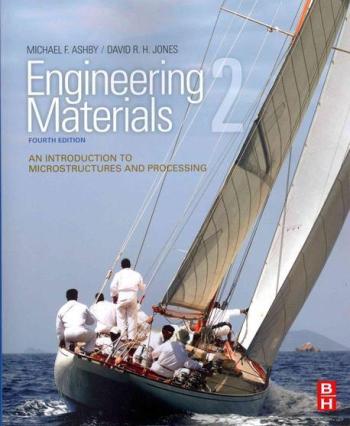
Engineering Materials 2 (4/E)

  • Ashby, Michael F.
  • ELSEVIER
  • 2015년 03월 01일
사용자 평점
0리뷰 0개
10%80,10089,000원
적립금
4,450원 (5% 적립)
추가 적립 안내
  • 5만원 이상 결제 시 (*배송비 제외)

    정가제FREE(상품/사은품) 금액이
    2,000원 이상이면 2,000원 추가적립

  • 10만원 이상 결제 시 (*배송비 제외)

    정가제FREE(상품/사은품) 금액이
    2,000원 이상이면 2,000원 추가적립

    정가제FREE(상품/사은품) 금액이
    5,000원 이상이면 5,000원 추가적립

회원가입 시 적립금 즉시 지급!

배송비
무료 (해외배송의 경우 지역에 따라 상이)

배송안내

배송비 안내
  • 1만원 이상 주문 시 무료배송 입니다.
  • 주문하신 상품을 해외로 배송 하시는 경우에는 별도의 항공료 가 부과됩니다
서울특별시 강남구 강남대로 542(논현동, 영풍빌딩)
주문 수량 변경시 안내

[주문/배송] 주문 수량 변경 시 안내

주문 수량 변경 시,배송일정이 변경될 수 있으니 반드시 확인해 주시기 바랍니다.
(고객센터 1544-9020)

지금 주문하면 9/22(화) 출고 가능
상품 규격 정보
상품상세정보
ISBNISBN-13 : 9780080966687
쪽수553쪽
크기기타 규격
제품구성단행본
이 책이 속한 분야
  • 외서 전문서적 > APPLIED SCIENCE
관련 이벤트

AI추천 이유

책 소개
Engineering Materials: An Introduction to Microstructures and Processing is a comprehensive introduction to microstructures and processing of materials for engineering students and other related courses. It is composed of chapters that are arranged into four sections: metals, ceramics, polymers, and composites, which are the distinct generic classes of materials. The materials are presented in an easy-to-read style, while establishing the main concepts and providing details on how processing, microstructures, and physicochemical characters are interrelated.

The book emphasizes the relationship between structure, processing and properties, of both conventional and innovative materials. It provides detailed discussions of the different aspects of transformations, including interface kinetics, nucleation and growth, and constitutional undercooling. The book also presents new case studies and examples to illustrate, develop and consolidate the different topics. The text features new photographs and links to Google Earth, websites and video clips, and a companion site with access to instructors' resources: solution manual, image bank of figures from the book and a section of interactive materials science tutorials.

The text aims to provide detailed discussions about engineering materials to senior-level and postgraduate students of mechanical engineering, manufacturing, materials science, engineering design, products design, aeronautical engineering, and other engineering sciences.

* Many new or revised applications-based case studies and examples
* Treatment of phase diagrams integrated within the main text
* Increased emphasis on the relationship between structure, processing and properties, in both conventional and innovative materials
* Frequent worked examples - to consolidate, develop, and challenge
* Many new photographs and links to Google Earth, websites, and video clips
* Accompanying companion site with access to instructors' resources, including a suite of interactive materials science tutorials, a solutions manual, and an image bank of figures from the book
목차
Preface to the Fourth Editionxiii
Acknowledgementsxv
General Introductionxvii
Part AMetals
Chapter 1Metals3
1.1Introduction3
1.2Metals for a Model Steam Engine3
1.3Metals for Drinks Cans9
1.4Metals for Hip Joints10
1.5Data for Metals12
Chapter 2Metal Structures15
2.1Introduction15
2.2Crystal and Glass Structures15
2.3Structures of Solutions and Compounds16
2.4Phases19
2.5Grain and Phase Boundaries19
2.6Shapes of Grains and Phases22
2.7Summary-Constitution and Structure25
Worked Example26
Chapter 3Phase Diagrams 133
3.1Introduction33
3.2Source Books33
3.3Components, Phases, and Structures34
Worked Example37
Worked Example39
3.4One-and Two-Component Systems43
Worked Example52
3.5Solutions to Examples56
Chapter 4Phase Diagrams 263
4.1Eutectics, Eutectoids, and Peritectics63
4.2Test Examples78
4.3Solutions to Examples82
Chapter 5Case Studies in Phase Diagrams89
5.1Introduction89
5.2Choosing Soft Solders89
5.3Pure Silicon for Microchips93
5.4Making Bubble-Free Ice98
Worked Example101
Chapter 6Driving Force for Structural Change109
6.1Introduction109
6.2Driving Forces109
6.3Reversibility113
6.4Stability, Instability, and Metastability114
6.5Driving Force for Solidification115
6.6Solid-State Phase Changes118
6.7Precipitate Coarsening118
6.8Grain Growth119
6.9Recrystallization120
6.10Sizes of Driving Forces120
Worked Example121
Chapter 7Kinetics 1-Diffusive Transformations125
7.1Introduction125
7.2Solidification125
7.3Heat-Flow Effects131
7.4Solid-State Phase Changes132
7.5Diffusion-Controlled Kinetics132
7.6Shapes of Grains and Phases134
Worked Example136
Chapter 8Kinetics 2-Nucleation141
8.1Introduction141
8.2Nucleation in Liquids141
8.3Heterogeneous Nucleation143
8.4Nucleation in Solids147
8.5Summary148
8.6Nucleation Everywhere148
Worked Example149
Chapter 9Kinetics 3-Displacive Transformations155
9.1Introduction155
9.2Diffusive f.c.c. to b.c.c. Transformation in Pure Iron156
9.3Time-Temperature-Transformation Diagram160
9.4Displacive f.c.c. to b.c.c. Transformation161
9.5Details of Martensite Formation163
9.6Martensite Transformation in Steels165
Worked Example167
Chapter 10Case Studies in Phase Transformations171
10.1Introduction171
10.2Making Rain171
10.3Fine-Grained Castings173
10.4Single Crystals for Semiconductors178
10.5Amorphous Metals179
Worked Example182
Chapter 11Light Alloys189
11.1Introduction189
11.2Solid Solution Hardening190
11.3Age (Precipitation) Hardening193
11.4Work Hardening200
Worked Example200
Chapter 12Steels 1-Carbon Steels205
12.1Introduction205
12.2Microstructures After Slow Cooling (Normalizing)205
12.3Mechanical Properties of Normalized Steels211
12.4Quenched-and-Tempered Steels211
12.5Notes on the TTT Diagram212
Chapter 13Steels 2-Alloy Steels221
13.1Introduction221
13.2Hardenability221
13.3Solution Hardening225
13.4Precipitation Hardening225
13.5Corrosion Resistance226
13.6Stainless Steels226
13.7Phases in Stainless Steels229
13.8Improving Stainless Steels230
Worked Example230
Chapter 14Case Studies in Steels237
14.1Detective Work After a Boiler Explosion237
14.2Welding Steels Safely241
14.3The Case of the Broken Hammer244
Chapter 15Processing Metals 1255
15.1Introduction255
15.2Casting256
15.3Deformation Processing266
15.4Recrystallization272
Worked Example274
Chapter 16Processing Metals 2279
16.1Machining279
16.2Joining280
16.3Heat Treating282
16.4Special Topics285
Worked Example290
Part BCeramics
Chapter 17Ceramics299
17.1Introduction299
17.2Generic Ceramics304
17.3Ceramic Composites307
17.4Data for Ceramics307
Chapter 18Ceramic Structures313
18.1Introduction313
18.2Ionic and Covalent Ceramics313
18.3Simple Ionic Ceramics314
18.4Simple Covalent Ceramics316
18.5Silica and Silicates317
18.6Silicate Glasses319
18.7Ceramic Alloys320
18.8Microstructures of Ceramics321
18.9Vitreous Ceramics322
18.10Stone and Rock323
18.11Ceramic Composites323
Worked Example323
Chapter 19Mechanical Properties of Ceramics327
19.1Introduction327
19.2Elastic Moduli327
19.3Strength, Hardness, and Lattice Resistance328
19.4Fracture Strength of Ceramics330
19.5Modulus of Rupture332
19.6Compression Test333
19.7Thermal Shock Resistance335
19.8Time Dependence of Strength335
19.9Creep of Ceramics337
Chapter 20Processing Ceramics345
20.1Introduction345
20.2Production of Engineering Ceramics345
20.3Forming Engineering Ceramics346
20.4Production and Forming of Glass350
20.5Processing Pottery, Porcelain, and Brick352
20.6Improving Ceramics352
20.7Joining Ceramics355
Worked Example356
Chapter 21Cement and Concrete361
21.1Introduction361
21.2Chemistry of Cement361
21.3Structure of Portland Cement366
21.4Concrete368
21.5Strength of Cement and Concrete370
21.6High-Strength Cement372
21.7Reinforcing Cement and Concrete373
Worked Example375
Chapter 22Case Studies in Ceramics379
22.1Hard as Flint379
22.2Slate-Natural Roofing Material380
22.3Glass Roof Beams384
Worked Example388
Part CPolymers
Chapter 23Polymers393
23.1Introduction393
23.2Generic Polymers395
23.3Material Data398
Worked Example401
Chapter 24Polymer Structures405
24.1Introduction405
24.2Molecular Length406
24.3Molecular Architecture408
24.4Molecular Packing and Glass Transition410
Worked Example415
Chapter 25Mechanical Properties of Polymers419
25.1Introduction419
25.2Stiffness-Time and Temperature Dependent Modulus420
25.3Strength-Cold Drawing and Crazing430
Chapter 26Processing Polymers441
26.1Introduction441
26.2Polymer Synthesis442
26.3Polymer Alloys443
26.4Forming Polymers445
26.5Joining Polymers449
Worked Example449
Chapter 27Case Studies in Polymers457
27.1Fatal Bungee Jumping Accident457
27.2Polyethylene Gas Pipes464
27.3Ultrastrong Fibers for Yacht Rigging470
Part DComposites
Chapter 28Properties of Composites and Foams477
28.1Introduction477
28.2Fiber Composites478
28.3Modulus479
28.4Tensile Strength481
28.5Toughness484
28.6Foams and Cellular Solids486
28.7Properties of Foams487
28.8Materials that are Engineered490
Chapter 29Wood Structure and Properties493
29.1Introduction493
29.2Structure of Wood493
29.3Mechanical Properties of Wood497
29.4Elasticity497
29.5Tensile and Compressive Strength500
29.6Toughness501
29.7Wood Compared to Other Materials502
Worked Example503
Chapter 30Case Studies in Composites509
30.1Materials for Violin Bodies509
30.2Failure of a GFRP Surgical Instrument517
30.3Cork-A Unique Natural Foam519
Worked Example525
Appendix: Symbols and Formulae531
References541
Index543
저자 소개
저자 : Ashby, Michael F.
    도서리뷰

    이 책을 읽고 어떤 느낌을 받으셨나요?
    리뷰를 남기고 다른 독자들과 함께 공유해보세요.

    안내 열기구매(배송/수령완료) 후 리뷰를 작성하시면 적립금 300원을 드려요!

    등록된 리뷰가 없습니다

    첫번째 리뷰어가 되어주세요

    교환/반품/환불
    반품/교환방법
    • 마이페이지 > 주문관리 > 주문/배송조회 > 주문조회 후  [1:1상담신청]  또는 고객센터 (1544-9020)
    • ※ 오픈마켓, 해외배송 주문상품 문의 시 [1:1상담신청] 또는 고객센터 (1544-9020)
    반품/교환 가능기간
    • 변심반품의 경우 수령 후 7일 이내
    • 상품의 결함 및 계약내용과 다를 경우 문제점 발견 후 30일 이내
    반품/교환비용
    • 단순변심 혹은 구매착오로 인한 반품/교환은 반송료 고객 부담
    • 해외직배송 도서 구매 후 단순변심에 의한 취소 및 반품 시 도서판매가의 20% 수수료 부과
    반품/교환 불가 사유
    • 소비자의 책임 있는 사유로 상품 등이 손실 또는 훼손된 경우
    • 소비자의 사용, 포장 개봉에 의해 상품 등의 가치가 현저히 감소한 경우
      예) 만화, 잡지, 수험서 및 문제집류
    • 복제가 가능한 상품 등의 포장을 훼손한 경우
      예) 음반/DVD/비디오, 소프트웨어, 만화책, 잡지, 영상 화보집
    • 소비자의 요청에 따라 개별적으로 주문 제작되는 상품의 경우
    • 디지털 컨텐츠인 eBook, 오디오북 등을 1회 이상 다운로드를 받았을 경우
    • 시간의 경과에 의해 재판매가 곤란한 정도로 가치가 현저히 감소한 경우
    • 전자상거래 등에서의 소비자보호에 관한 법률이 정하는 소비자 청약철회 제한 내용에 해당되는 경우
    상품 품절
    • 공급사(출판사) 재고 사정에 의해 품절/지연될 수 있으며, 품절 시 관련 사항에 대해서는 이메일과 문자로 안내드리겠습니다.
    소비자 피해보상
    환불지연에 따른 배상
    • 상품의 불량에 의한 교환, A/S, 환불, 품질보증 및 피해보상 등에 관한 사항은 소비자분쟁 해결 기준 (공정거래위원회 고시)에 준하여 처리됨
    • 대금 환불 및 환불지연에 따른 배상금 지급 조건, 절차 등은 전자상거래 등에서의 소비자 보호에 관한 법률에 따라 처리함

    매장에서 사용할 수 있는 바코드가 있어요!