- 소득공제
- 정가제FREE
- 무료배송
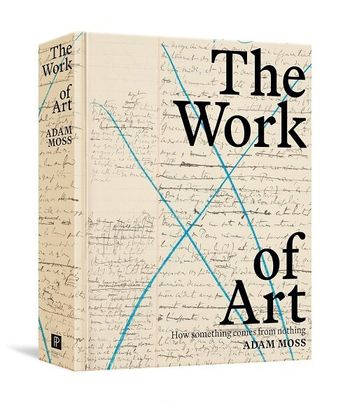
The Work of Art: How Something Comes from Nothing (Hardcover)
- Adam Moss
- Penguin Press
- 2024년 04월 16일
5만원 이상 결제 시 (*배송비 제외)
정가제FREE(상품/사은품) 금액이
2,000원 이상이면 2,000원 추가적립10만원 이상 결제 시 (*배송비 제외)
정가제FREE(상품/사은품) 금액이
2,000원 이상이면 2,000원 추가적립정가제FREE(상품/사은품) 금액이
5,000원 이상이면 5,000원 추가적립



회원가입 시 적립금 즉시 지급!
배송안내
- 1만원 이상 주문 시 무료배송 입니다.
- 주문하신 상품을 해외로 배송 하시는 경우에는 별도의 항공료 가 부과됩니다
[주문/배송] 주문 수량 변경 시 안내
주문 수량 변경 시,배송일정이 변경될 수 있으니 반드시 확인해 주시기 바랍니다.
(고객센터 1544-9020)
| ISBN | ISBN-13 : 9780593297582 |
|---|---|
| 쪽수 | 432쪽 |
| 크기 | 기타 규격 |
| 제품구성 | 양장 |
- 외서 일반서적 > ART/SPORT/MUSIC


AI추천 이유
노벨문학상 수상 시인부터 힙스터들의 뮤지션까지
〈뉴욕〉 ‘전설의 편집장’이 발굴한 현대예술가 48인의 창작 기록
생각은 어떻게 작품이 되는가? 무엇을 더하고 무엇을 덜어낼 것인가? 창작의 시작과 끝은 어디인가? 길을 잃을 땐 무엇을 해야 하는가?
창작자의 영원한 질문에 답하기 위해 40년 경력의 세계적인 저널리스트이자 화가인 애덤 모스가 현대예술의 최전선에 자리한 48명의 예술가와 전방위적인 대화를 나눈다. 소설가에서부터 안무가, 화가, 뮤지션, 영화감독, 편집자, 요리사, 십자말풀이 출제자에 이르기까지, 예술이라는 광활한 세계에서 새로운 역사를 써 내려가는 창작의 대가들이다.
애덤 모스는 이들이 창작 현장에서 남긴 유물에 주목한다. 냅킨 위의 낙서, 일기, 문자메시지, 스케치, 휘갈긴 초안 같은 것들이 어떻게 멋진 농담이 되고, 소설과 연극, 그림, 건축물로 거듭나는지 추적하고 분석한다. 그리고 예술에 관한 단순하고도 오랜 진리를 발견한다. 예술이란 희미한 아이디어에 윤곽을 부여하고 무수한 편집을 거듭하는 작업이라는 것을, 나아가 의심과 절망 속에서도 계속 해나갈 때 비로소 길이 보인다는 것을 말이다.
The New York Times bestseller and one of Barack Obama's Favorite Books of 2024
"The gift book of the year, a volume that should have broad appeal and deliver many hours of pleasure to the recipient. The Work of Art is a gorgeous book.” —John Warner, The Chicago Tribune
From former editor of New York magazine Adam Moss, a collection of illuminating conversations examining the very personal, rigorous, complex, and elusive work of making art
What is the work of art? In this guided tour inside the artist’s head, Adam Moss traces the evolution of transcendent novels, paintings, jokes, movies, songs, and more. Weaving conversations with some of the most accomplished artists of our time together with the journal entries, napkin doodles, and sketches that were their tools, Moss breaks down the work—the tortuous paths and artistic decisions—that led to great art. From first glimmers to second thoughts, roads not taken, crises, breakthroughs, on to one triumphant finish after another.
Featuring: Kara Walker, Tony Kushner, Roz Chast, Michael Cunningham, Moses Sumney, Sofia Coppola, Stephen Sondheim, Susan Meiselas, Louise Glück, Maria de Los Angeles, Nico Muhly, Thomas Bartlett, Twyla Tharp, John Derian, Barbara Kruger, David Mandel, Gregory Crewdson, Marie Howe, Gay Talese, Cheryl Pope, Samin Nosrat, Joanna Quinn & Les Mills, Wesley Morris, Amy Sillman, Andrew Jarecki, Rostam, Ira Glass, Simphiwe Ndzube, Dean Baquet & Tom Bodkin, Max Porter, Elizabeth Diller, Ian Adelman / Calvin Seibert, Tyler Hobbs, Marc Jacobs, Grady West (Dina Martina), Will Shortz, Sheila Heti, Gerald Lovell, Jody Williams & Rita Sodi, Taylor Mac & Machine Dazzle, David Simon, George Saunders, Suzan-Lori Parks
[본 문]
I WAS STANDING in the gift shop of the Guggenheim in Bilbao, Spain, flipping through the book Gehry Draws, when I came across the scribble you just passed a couple of pages back. It was more or less the first intimation the building’s architect, Frank Gehry, had of the museum, which became an architectural icon the moment it was built; it’s been compared with a boat, a fish, an artichoke, and Marilyn Monroe. I happen to love a doodle, and the scribble was a compelling little doodle in its own right, but what was so striking to me was how much it resembled the cockamamie (and extraordinary) structure I had come to Bilbao to see.
As I looked at the scribble and at the walls, and then back again at the drawing, an image out of a Pixar short popped into my head: the doodle shimmied to life to become the building it imagined, which now surrounded me. Gehry talks about these scribbles (his word for them—and there are many, just like this one) as his way of “thinking aloud.” And for a brief moment, I was right there with him when he had that first electric thought envisioning the place. It was one of those fleeting associations you hardly register. I moved on.
And yet I’d had a similar experience while I was still upstairs in the museum, at an exhibit of Alice Neel paintings that had been traveling around the world. Among them was a picture of a man named James Hunter, called Black Draftee (James Hunter).
As the story goes, Hunter came for a sitting, then went to Vietnam; he never returned to her studio. Neel looked at what she had applied to the canvas in that one meeting and declared the painting finished. I’m nuts about a lot of her work, but on that day as I was tooling around the galleries, I kept circling back to this painting. I was stuck on it. The interrupted portrait of Hunter was haunting, but what really got to me was the implied portrait—of Neel the artist, painting the picture. So there I was with her, too, experiencing the sit- ting as she experienced it.
And then it happened again. A day or so later I was in Madrid at the museum, and I saw this painting by Velázquez, one of the many court portraits of Philip IV. It’s hardly the most interesting of his works, but see where you can make out a trace of where it looks like the artist initially posed the king’s leg before fixing it? Standing by the painting, staring down the flaw, I felt as if I’d discovered a secret. It came as a gift to view Velázquez as mortal, making a decision and then thinking better of it.
I’ve long been attracted to this sort of artifact—of artists caught in the act of making art. If you look around, you can find them in corners of the internet: academic websites, auction house offerings, fanzines. They show up in the occasional exhibit, or as a sideshow in museum retrospectives. There are many types: tossed-off sketches and more-considered studies, unfinished work, meandering notes to self, scribbled lyric fragments, marked-up text, mad out- lines. I find them almost inexplicably beautiful in all their genres.
Some of my interest is aesthetic. I appreciate a crude hand; I can see the artist in it. I respect the honesty of the specimens, knowing they were not meant for me to see. They’re forensically interesting, often revealing stages of thinking. But I suppose what I find most satisfying about them is the way they seem to embody anticipation. They’re full of portent, more verb than noun. Also, poring over them gives me the same charge I get from reading the letters and journals of famous people. There’s a nosy pleasure in that, and I’ve often thought, in passing, that someone ought to put these kinds of documents in a book. So, to begin with, that’s what you’re holding right now.
But that’s not really what this book is about. The true value of unbaked scrawls and sketches and whatnot is as a window to an artist’s process. Process is an ugly-sounding word—pedestrian jargon for the inherently wondrous act of creation—but it describes a method by which a thing evolves, which has always had a hold on me. For over forty years I was an editor, of magazines mostly: New York most recently, The New York Times Magazine before that, and also a short-lived weekly called 7 Days. Particularly in the kinds of general-interest magazines I was editing, you could follow your curiosities any old place (that was the job description), and mine was often the how of anything. While a childlike interest perhaps—naive and open-ended, each how toppling into another—it was also opportunistic. I published a lot of what is known as process journalism, origin stories especially, which could then be fashioned into narrative.
As an editor, what I liked about these stories (beyond their answers to my questions) was the classic structure of them—each inherently dramatic, starting with nothing and ending with something. Cultural procedurals were especially good material. Years ago I assigned a story on Stephen Sondheim in which he explained, in thousands of words, how he wrote a single song. That was pretty great. I published the story on the Guggenheim Museum in Bilbao that compared the building with Marilyn Monroe. I traced the evolutions of songs and novels and soap opera arcs. As an editor and as a reader, I found the story of how creators create irresistible.
And that interest wasn’t restricted to the page. When I could get a closer look, I took advantage of opportunities that came my way. One day I was invited to visit the set of the HBO political satire Veep. There I watched David Mandel, who ran the show, tune a joke. Its punchline was a Jewish holiday. He kept barking out variations, landing the joke on different holidays—Yom Kippur or Simchat Torah, which is funnier?—improving it steadily until one turn fell flat. That’s when he knew he had gone too far. All that for a throw- away joke? I was mesmerized.
You’ll see I talk to Mandel about that later on. But I mention it here to say that I’ve always been a freak for the zealous pursuit of the better, especially where culture is concerned. I love the story of it, and also the motive. So that, too, is what this book is—a celebration of the art that happens when instinct meets rigor. But it isn’t only that either.
I’m a painter. I feel ridiculous saying that. But when I quit my magazine job sometime before that trip to Spain, I decided to try my hand as an artist. It wasn’t entirely abrupt: in my work I always found it satisfying telling stories in photographs and graphics and drawings, and in spare moments—a whim at first—I picked up a paintbrush to try making images myself. I have no background in art at all, but I liked it, and I dabbled. Then I left my job, and I began to paint more seriously. That was the beginning of my torment: I just wasn’t very good.
After I learned a few skills, I could paint all right—basic stuff. My drawing got better, I knew my way around a color wheel, I could represent in a primitive way. And representation was what I was after—mainly because I didn’t have the courage to be more adventurous. If I were to try to describe what sort of painter I was, I guess you could say I was a figure painter with a distorting style (much like Alice Neel in my fantasies), but the distortion wasn’t always exactly deliberate. I just couldn’t do any better. Decent paintings sometimes emerged, but they seemed almost by accident. And they were accidents I couldn’t necessarily re-create. I was conservative—if one part of a painting showed promise, I would protect it and put the rest of the painting at risk. Sometimes I could get something going, and then tentatively feel emboldened to try something new (my paintings weren’t loose enough; I kept trying new ways to break the bad habits I was already picking up as a new painter), and then fall back, and that would scare me—so I would retreat to what I knew, which meant resuming the bad habits. As a result I made the same painting over and over again. I got frustrated easily and gave up easily, never knowing when to persevere or surrender. I had no faith that I could make the painting I wanted. If I stopped midway, that ideal painting could at least remain intact—in my mind. If I painted it, and painted poorly, I’d be crushed. You can see that these are all problems more of the head than of the hand (though there were plenty of technique issues as well). Basically, it all seemed impossible.
And yet though it sounds horrible, it wasn’t entirely. It was like a bad affair. I loved it even as it tortured me. And at least it consumed me. In spite of my troubles, I kept painting. Though I pretended otherwise, I really was ambitious. I wanted to be good. And when I was at my most exasperated, I found myself asking the same question I had asked as an editor: How does anybody make art?
Only now, my professional interest had become personal. The problems I am describing were ones of editorial self-scrutiny run amok, as if I had an overeager immune system that was sabotaging me. Editing is deliberating— choosing a word or a thought, dismissing or advancing; it comes up often in this book as a way to describe artistic decision-making. And in my journalism career, editing had served me well. My temperament was well suited to it. I always had trouble writing—I was too self-conscious (you can see a pattern). And I couldn’t bear working alone. But I thrived in a group and in response: I could corral ideas, and sharpen them. And I enjoyed thinking of the magazine itself as a canvas, playing with new ways to use it. In the various magazines I ran, we were forever trying to invent original story forms, and those attempts got even more interesting (we could invent whole new magazines on the fly) as the digital age kept offering up new toys to work with. But the emphasis here is on the we. There was safety in numbers. It was as part of a community that I was most successful.
But that was in the past. Now I was on my own wanting to be a painter—and I was vain enough to hope that I could even, maybe, make something interesting. Because why else do it? I didn’t dare express that hope out loud, because serious art making seemed so far out of reach.
I was staring at a canvas, in a room all by myself, and getting—not nowhere, but not far enough. I took to YouTube for tutorials, but realized it wasn’t practical help I was seeking—in fact, the inevitably contradictory guidance often confused me. And anyway, I figured skills would just come with more practice. I went to see a lot of art. And I read a lot about painting. In one book, a monograph about the figurative artist Eric Fischl (Eric Fischl:1970–2007) I came across this passage in which he described the making of one of his more famous paintings, called Bad Boy.
Here’s what Fischl had to say about it:
[Bad Boy] was an extremely meaningful painting for me to paint, not only because of what it ultimately came to mean to my career, but also because of how I got to it . . . . I was so lost in that picture that I actually had no idea what I was looking for . . . . I started out just wanting to paint a bowl of fruit. I went
from painting that bowl of fruit to constructing the room that the fruit could be in, to finding who might be in that room and what time of day it was. Who I first thought was in the room wasn’t there. People came and went. The twelve-year- old boy stealing money from the purse started out as an infant, lying next to the woman; then became a five-year-old sitting on the edge of the bed . . . He literally grew up in that room . . . I just kept following it, [trying] things that
didn’t work. I just painted things in, and painted things out.
Reading this account, I felt some of my torture starting to lift. I appreciated Fischl’s willingness to allow me into his mind as he stumbled through the work. His struggle was comforting—and illuminating. It gave me the beginnings of an idea.
“The book is a visual feast, full of drafts, sketches, and scribbled notebook pages. Every page shows how an idea becomes a finished design.” —Ari Shapiro, All Things Considered
“In The Work of Art, famed creators from the worlds of film, fashion, theater and more explore the hidden alchemy of their craft . . . [Moss] suggests that receptiveness to chance guides art as much as skill. It’s a liberating fact. He wants to demystify creation, and often succeeds. [A] vibrant, companionable and punchily precise dossier.” —Walker Mimms, The New York Times
"I understand that we are barely past the midpoint of the year, nonetheless I’m ready to declare the gift book of the year, a volume that should have broad appeal and deliver many hours of pleasure to the recipient. The Work of Art is a gorgeous book.” —John Warner, The Chicago Tribune
“Moss wants to understand what makes artists tick, and he goes about it in a pragmatic, anti-Romantic way. He treats art works as a mechanically minded kid might treat a dismantled tape deck, poking and prodding their insides to figure out how all these jangled parts make a whole.[The Work of Art] is designed to be absorbed in bursts of pleasure.” —Alexandra Schwartz, The New Yorker
“[D]elightful.” —California Review of Books
“[A] lavish work that presents the doodles and rough drafts and sketches of art in progress.” —Parade, The 27 Best Coffee Table Books of 2024
“My favorite book of the year . . . The book itself is really beautiful . . . A great bible for all of us trying to create great art.” —Daniel Pink, The Next Big Idea podcast
“[The Work of Art] is a big, beautiful thing to behold . . . It contains 43 gorgeously illustrated interviews with artists of all stripes . . . The book is, to borrow a Yeates phrase, ‘a meditation on the fascination of what’s difficult.’ And it’s a book the team here has not been able to stop talking about . . . It has changed the way we think about making the craft of this show.” —Rufus Griscom, The Next Big Idea podcast
“An incredible object [and] brilliant book . . . An amazing sort of encyclopedia, document, spiritual journey, cosmological alignment of enormous of numbers of artists from Louise Gluck to Kara Walker to Stephen Sondheim.” —Jerry Saltz, New York Magazine Senior Art Critic
“The Work of Art is a case study in creativity featuring preeminent artists of our time.” —Vanity Fair
"The Work of Art is Moss at his most curious and engaging... Seductive, enthralling and a joy to read." —Air Mail
“This book is—and I really want people to hear it: It's a piece of art.” —Ezra Klein, The Ezra Klein Show
“Gorgeously illustrated . . . Fabulous insights into the artist’s work.” —NBC, "Today in New York"
“Essential and inspirational . . . Throughout, you witness the duality of creation. The ways an artist absorbs and rejects. Allowing in and kicking out. Opening and closing off . . . [Moss] has a delightful rapport with the artists and is a lively, intensely interested listener. You can see why they open up to him and trust him.” —Observer
“Very much a museum, the book shows how ideas can be taken from seed to fruition, a skill Moss honed as the editor of New York magazine. Readers will linger in these galleries as they consider the ideas of more than 40 creatives working in art forms that include sculpting, painting, cooking, writing, and even building sandcastles. The artists represented here are an extraordinary group, with such luminaries as Louise Glück, Kara Walker, Stephen Sondheim, and Ira Glass. Visitors to Moss's museum will delight in its visual styling, with every detail—font, layout, design, color—governed by a spare but finely appointed aesthetic. The artifacts that accompany each section prove fascinating . . . Moss strikes the perfect balance with his tone: breezy and conversational but driven by intellectual curiosity . . . Throughout The Work of Art, Moss chases the origin and evolution of creativity, a lofty but highly practical goal, especially to emerging creatives looking for inspiration. He may not solve that elusive puzzle, but readers will love the treasure trove of wisdom he uncovers.” —Shelf Awareness
“A panoply of artists offer a rare peek into the mysteries and mundanities of the creative process in this captivating compendium . . . Moss concludes on a fascinating note, musing that while ‘artists don’t have more interesting dreams than the rest of us,’ they do possess ‘an unusual ability to cross over—to get entrance to that inarticulable place, and then to capture what they can make use of.’ It’s a must-read for creatives of all stripes.” —Publishers Weekly (starred review)
“In this handsome book, [Adam Moss] interviews more than 40 creators in all disciplines who ‘walk me through, in as much detail as they could muster, the evolution of a novel, a painting, a photograph, a movie, a joke, a song, and to supply physical documentation of their process.’ Many of the creators are well known, including Stephen Sondheim, Louise Glück, Twyla Tharp, and George Saunders . . . The book is amply illustrated, with sketches for dress designs, notes on animation, preliminary concepts for buildings, doodled ideas on coffee-stained napkins, and more . . . this is an inspiring work, especially for anyone struggling to create art and wondering whether the slogs and endless false starts are worth the effort. An encouraging book dedicated to the pleasures and agonies of making art.” —Kirkus Reviews
“[A] visionary book. ... [Moss’s] love for conversational, witty storytelling is clear here. . . The images elevate the book to a compendium of precious ephemera. It’s possible Moss has invented a new literary genre. However it’s classified, you’ll read it cover to cover.” —BookPage
“The Work of Art by Adam Moss is a handsome, strikingly designed, color-glossy book of interviews with all manner of artists . . . Moss’s voice is distinct—sympathetic, appreciative, confessional, generous, curious, humorous—as he compares the anguish and achievements of others with his own continuing struggles to be a painter . . . The book is clearly a work of love . . . ” —WSHU Public Radio
“[A] revelatory window on the creative process at the crossing point of the mystical and the methodical through conversations with and reflections by some of the most beloved artists of our time—poets, painters, novelists, musicians, filmmakers, playwrights, architects, chefs—each centered on how a particular work came to be . . . The Work of Art is a magnificent read in its entirety, lush with ephemera from the understory of creativity—discarded drafts, handwritten journal pages, preliminary sketches and prototypes, notes from the subconscious scribbled in the middle of the night.” —Maria Popova, The Marginalian
등록된 리뷰가 없습니다
첫번째 리뷰어가 되어주세요
| 반품/교환방법 | |
|---|---|
| 반품/교환 가능기간 |
|
| 반품/교환비용 |
|
| 반품/교환 불가 사유 |
|
| 상품 품절 |
|
| 소비자 피해보상 환불지연에 따른 배상 |
|

이 책을 읽고 어떤 느낌을 받으셨나요?
리뷰를 남기고 다른 독자들과 함께 공유해보세요.
안내 열기구매(배송/수령완료) 후 리뷰를 작성하시면 적립금 300원을 드려요!