이 이야기 모음집의 제목 ‘로맨틱 테일즈’는 이중적인 의미가 있습니다. 이 작품들은 말할 것도 없이 사랑과 로맨스를 다루고 있습니다. 또한 각각의 작품이 세상에 나오게 된 과정에도 저마다 흥미로운 ‘로맨스’가 있습니다.
〈향기로운 봄(Fragrant Springtime)〉은 한국의 고전 소설 춘향전을 비교적 간결하게 풀어낸 작품입니다. ‘춘향’이라는 이름 자체가 ‘봄의 향기’이니 제목은 이름을 풀은 것입니다.
우리가 모두 아는 것처럼 지방 수령의 아들인 이몽룡은 우연히 춘향을 보고 한눈에 사랑에 빠집니다. 두 사람의 사랑은 깊어지지만, 몽룡은 곧 고을을 떠나야 합니다. 새로 부임한 사또는 춘향에게 자신의 수청을 강요하지만, 그녀는 끝까지 거부하다 옥에 갇힙니다. 그리고 마침내 돌아온 몽룡에 의해 극적으로 구출됩니다.
여기 영어로 번역된 이 작품은 원래 1892년 파리에서 J.-H. 로스니(J.-H. Rosny)의 장편소설로 프랑스어판이 출간되었습니다. 그러나 J.-H. 로스니라는 작가는 실제 인물이 아니라, 벨기에 출신의 보엑스(Boex) 형제가 함께 사용한 필명이었습니다. 이들은 한국과 직접적인 인연이 전혀 없었습니다. 다만 서문에서 한 한국인의 도움을 받았다고 밝히고 있는데, 그 인물이 바로 홍종우입니다.
홍종우는 1890년 한국인으로서는 최초로 파리에 도착한 인물이었습니다. 그는 매우 극적인 삶을 살았는데, 1894년 귀국길에 상하이에서 한국의 대표적인 개화파 지도자 김옥균을 권총으로 사살한 인물로도 유명합니다. 홍종우는 당시 막 파리에 들어온 한국 서적 속의 춘향 이야기를 보엑스 형제에게 설명해 주었고, 형제는 그 내용을 비교적 충실하게 소설로 옮긴 것으로 보입니다.
이 책의 마지막 작품인 〈죽은 나무에 꽃이 피다(A Dead Tree Blossoms)〉 역시 홍종우와 깊은 관련이 있습니다. 이 작품은 1895년 파리에서 프랑스어로 출간되었으며, 표지에는 ‘홍종우 지음’이라고 적혀 있습니다. 그러나 내용을 읽어 보면 일부는 심청전, 즉 눈먼 아버지의 눈을 뜨게 하기 위해 자신을 희생하는 심청의 이야기에서 가져왔고, 또 다른 부분은 춘향의 옥살이와 탈출 장면을 연상시킵니다. 한편 나머지 내용은 기존의 어떤 한국 고전과도 닮지 않았지만, 그 자체로 낭만적인 이야기입니다.
더욱 흥미로운 점은 이 작품이 매우 뛰어난 프랑스어로 쓰였다는 사실입니다. 홍종우는 프랑스어를 그 정도 수준으로 구사할 만큼 오래 프랑스에 머무르지 않았습니다. 이 수수께끼는 최근에야 풀렸습니다. 한 프랑스인이 자신이 홍종우의 부탁을 받아 이 책을 직접 집필했다고 주장하는 항의 편지가 발견된 것입니다. 홍종우는 심청 이야기의 일부만 들려주었을 뿐이며, 실제 집필은 그 프랑스인이 맡았다는 내용이었습니다. 더욱 흥미롭게도, 이 책에 다시 실은 영어 번역본은 1919년 미국에서 출간된 찰스 먼디 테일러(Charles Mundy Taylor)의 《부처의 미소를 얻다(Winning Buddha’s Smile)》라는 독특한 제목의 책에서 가져온 것입니다. 그 외에는 이 저자에 대해 알려진 바가 거의 없습니다.
이 두 작품 사이에는 또 다른 세 편의 짧은 이야기를 실었습니다. 이 작품들 역시 매우 낭만적인 분위기를 지니고 있습니다. 모두 1913년 런던에서 출간된 《Korean Folk Tales》에서 가져온 것으로, 캐나다 출신 선교사 제임스 스카스 게일(James Scarth Gale)이 한국어 원전을 영어로 번역한 것입니다.
게일은 1888년 선교사로 한국에 왔습니다. 그러나 다른 선교사들과 달리 그는 한국의 고전문학에 깊이 매료되어 수많은 작품을 읽고 번역했습니다. 책 제목은 ‘민담(Folk Tales)’이지만, 이 세 작품은 사실 조선 후기의 대학자 임방(1640~1722)이 쓴 단편소설입니다. 임방은 한때 한성부윤(서울시장에 해당하는 직책)까지 올랐으나 정치적 갈등에 휘말려 유배지에서 생을 마감했습니다. 옛 한국의 선비들 역시 사랑과 낭만이 담긴 이야기를 즐겼음을 이 작품들은 잘 보여 줍니다.
The title of this collection of stories has multiple meanings. The stories are (more or less) about love and romance, certainly, and they are set in Korea. But in addition, each of them has a more or less romantic origin that adds interest. ‘Fragrant Springtime’ is a fairly simple version of the famous old Korean tale of Chunhyang, whose name means ‘springtime fragrance.’ She is glimpsed by the noble son of the local governor, who falls madly in love with her. Their romance blossoms but then he has to leave the town. The new governor wants to force her to submit to him. She refuses, is imprisoned, but is rescued at the last moment by her former lover.
The version translated into English here was published in Paris in French in 1892 as a novel by J.-H. Rosny. Only there was no novelist by that name, it is an alias used by two Belgian brothers called Boex, who had no contact with Korea. In the Preface they mention the help they received from a certain Hong Jong-woo, a Korean. He was in fact the first Korean ever to reach Paris, in 1890, and is himself a romantic figure, not least because after returning Eastward in 1894 he shot and killed a famous Korean reformer, Kim Ok-gyun, in Shanghai. Hong seems to have explained to the Boex brothers the story of Chunhyang that he found in a Korean book recently arrived in Paris. They followed that story quite faithfully.
The last story in this volume, ‘A Dead Tree Blossoms,’ is also linked to Hong Jong-woo, above all because it was published in French with that title in Paris in 1895, after his departure, as being a tale ‘by Hong Jong-woo.’ As we read it, we see that parts of it are taken from the Korean tale of Shim Cheong, the girl who sacrifices herself in the hope that her blind father will recover his sight. But only parts. Other parts imitate the story of Chunhyang’s imprisonment and escape. Other parts are very unlike any known Korean tale, although quite romantic in their own right. Even more mysterious, it is written in excellent French, a language that Hong had no time to master. The mystery was only solved recently, with the finding of an angry letter from a Frenchman who claimed to have written the book at the request of Hong, who might have vaguely told him parts of the Shim Cheong story, but not more. Equally romantic, the English translation of the tale reprinted here is taken from a book published in the USA in 1919, by an otherwise unknown Charles Mundy Taylor, with the strange title ‘Winning Buddha’s Smile.’
Between these tales we have inserted three short stories which also seem quite ‘romantic.’ They are taken from a book titled ‘Korean Folk Tales’ published in London in 1913, translations from Korean by James Scarth Gale. Gale was Canadian. He arrived in Korea as a missionary in 1888. Unlike other missionaries, he was fascinated by the literature of ancient Korea, read and translated a great deal. Despite the title ‘folk tales’ these stories are translations of short stories written by a great scholar, Im Bang (1640-1722), who rose to become governor of Seoul before being caught up in political quarrels and dying in exile. Old Korean scholars could also enjoy stories of romance, it seems.
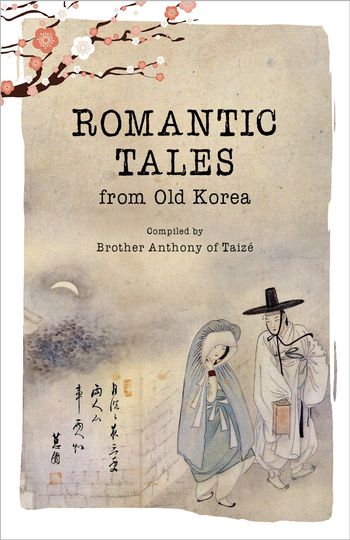







이 이야기 모음집의 제목 ‘로맨틱 테일즈’는 이중적인 의미가 있습니다. 이 작품들은 말할 것도 없이 사랑과 로맨스를 다루고 있습니다. 또한 각각의 작품이 세상에 나오게 된 과정에도 저마다 흥미로운 ‘로맨스’가 있습니다.
〈향기로운 봄(Fragrant Springtime)〉은 한국의 고전 소설 춘향전을 비교적 간결하게 풀어낸 작품입니다. ‘춘향’이라는 이름 자체가 ‘봄의 향기’이니 제목은 이름을 풀은 것입니다.
우리가 모두 아는 것처럼 지방 수령의 아들인 이몽룡은 우연히 춘향을 보고 한눈에 사랑에 빠집니다. 두 사람의 사랑은 깊어지지만, 몽룡은 곧 고을을 떠나야 합니다. 새로 부임한 사또는 춘향에게 자신의 수청을 강요하지만, 그녀는 끝까지 거부하다 옥에 갇힙니다. 그리고 마침내 돌아온 몽룡에 의해 극적으로 구출됩니다.
여기 영어로 번역된 이 작품은 원래 1892년 파리에서 J.-H. 로스니(J.-H. Rosny)의 장편소설로 프랑스어판이 출간되었습니다. 그러나 J.-H. 로스니라는 작가는 실제 인물이 아니라, 벨기에 출신의 보엑스(Boex) 형제가 함께 사용한 필명이었습니다. 이들은 한국과 직접적인 인연이 전혀 없었습니다. 다만 서문에서 한 한국인의 도움을 받았다고 밝히고 있는데, 그 인물이 바로 홍종우입니다.
홍종우는 1890년 한국인으로서는 최초로 파리에 도착한 인물이었습니다. 그는 매우 극적인 삶을 살았는데, 1894년 귀국길에 상하이에서 한국의 대표적인 개화파 지도자 김옥균을 권총으로 사살한 인물로도 유명합니다. 홍종우는 당시 막 파리에 들어온 한국 서적 속의 춘향 이야기를 보엑스 형제에게 설명해 주었고, 형제는 그 내용을 비교적 충실하게 소설로 옮긴 것으로 보입니다.
이 책의 마지막 작품인 〈죽은 나무에 꽃이 피다(A Dead Tree Blossoms)〉 역시 홍종우와 깊은 관련이 있습니다. 이 작품은 1895년 파리에서 프랑스어로 출간되었으며, 표지에는 ‘홍종우 지음’이라고 적혀 있습니다. 그러나 내용을 읽어 보면 일부는 심청전, 즉 눈먼 아버지의 눈을 뜨게 하기 위해 자신을 희생하는 심청의 이야기에서 가져왔고, 또 다른 부분은 춘향의 옥살이와 탈출 장면을 연상시킵니다. 한편 나머지 내용은 기존의 어떤 한국 고전과도 닮지 않았지만, 그 자체로 낭만적인 이야기입니다.
더욱 흥미로운 점은 이 작품이 매우 뛰어난 프랑스어로 쓰였다는 사실입니다. 홍종우는 프랑스어를 그 정도 수준으로 구사할 만큼 오래 프랑스에 머무르지 않았습니다. 이 수수께끼는 최근에야 풀렸습니다. 한 프랑스인이 자신이 홍종우의 부탁을 받아 이 책을 직접 집필했다고 주장하는 항의 편지가 발견된 것입니다. 홍종우는 심청 이야기의 일부만 들려주었을 뿐이며, 실제 집필은 그 프랑스인이 맡았다는 내용이었습니다. 더욱 흥미롭게도, 이 책에 다시 실은 영어 번역본은 1919년 미국에서 출간된 찰스 먼디 테일러(Charles Mundy Taylor)의 《부처의 미소를 얻다(Winning Buddha’s Smile)》라는 독특한 제목의 책에서 가져온 것입니다. 그 외에는 이 저자에 대해 알려진 바가 거의 없습니다.
이 두 작품 사이에는 또 다른 세 편의 짧은 이야기를 실었습니다. 이 작품들 역시 매우 낭만적인 분위기를 지니고 있습니다. 모두 1913년 런던에서 출간된 《Korean Folk Tales》에서 가져온 것으로, 캐나다 출신 선교사 제임스 스카스 게일(James Scarth Gale)이 한국어 원전을 영어로 번역한 것입니다.
게일은 1888년 선교사로 한국에 왔습니다. 그러나 다른 선교사들과 달리 그는 한국의 고전문학에 깊이 매료되어 수많은 작품을 읽고 번역했습니다. 책 제목은 ‘민담(Folk Tales)’이지만, 이 세 작품은 사실 조선 후기의 대학자 임방(1640~1722)이 쓴 단편소설입니다. 임방은 한때 한성부윤(서울시장에 해당하는 직책)까지 올랐으나 정치적 갈등에 휘말려 유배지에서 생을 마감했습니다. 옛 한국의 선비들 역시 사랑과 낭만이 담긴 이야기를 즐겼음을 이 작품들은 잘 보여 줍니다.
The title of this collection of stories has multiple meanings. The stories are (more or less) about love and romance, certainly, and they are set in Korea. But in addition, each of them has a more or less romantic origin that adds interest. ‘Fragrant Springtime’ is a fairly simple version of the famous old Korean tale of Chunhyang, whose name means ‘springtime fragrance.’ She is glimpsed by the noble son of the local governor, who falls madly in love with her. Their romance blossoms but then he has to leave the town. The new governor wants to force her to submit to him. She refuses, is imprisoned, but is rescued at the last moment by her former lover.
The version translated into English here was published in Paris in French in 1892 as a novel by J.-H. Rosny. Only there was no novelist by that name, it is an alias used by two Belgian brothers called Boex, who had no contact with Korea. In the Preface they mention the help they received from a certain Hong Jong-woo, a Korean. He was in fact the first Korean ever to reach Paris, in 1890, and is himself a romantic figure, not least because after returning Eastward in 1894 he shot and killed a famous Korean reformer, Kim Ok-gyun, in Shanghai. Hong seems to have explained to the Boex brothers the story of Chunhyang that he found in a Korean book recently arrived in Paris. They followed that story quite faithfully.
The last story in this volume, ‘A Dead Tree Blossoms,’ is also linked to Hong Jong-woo, above all because it was published in French with that title in Paris in 1895, after his departure, as being a tale ‘by Hong Jong-woo.’ As we read it, we see that parts of it are taken from the Korean tale of Shim Cheong, the girl who sacrifices herself in the hope that her blind father will recover his sight. But only parts. Other parts imitate the story of Chunhyang’s imprisonment and escape. Other parts are very unlike any known Korean tale, although quite romantic in their own right. Even more mysterious, it is written in excellent French, a language that Hong had no time to master. The mystery was only solved recently, with the finding of an angry letter from a Frenchman who claimed to have written the book at the request of Hong, who might have vaguely told him parts of the Shim Cheong story, but not more. Equally romantic, the English translation of the tale reprinted here is taken from a book published in the USA in 1919, by an otherwise unknown Charles Mundy Taylor, with the strange title ‘Winning Buddha’s Smile.’
Between these tales we have inserted three short stories which also seem quite ‘romantic.’ They are taken from a book titled ‘Korean Folk Tales’ published in London in 1913, translations from Korean by James Scarth Gale. Gale was Canadian. He arrived in Korea as a missionary in 1888. Unlike other missionaries, he was fascinated by the literature of ancient Korea, read and translated a great deal. Despite the title ‘folk tales’ these stories are translations of short stories written by a great scholar, Im Bang (1640-1722), who rose to become governor of Seoul before being caught up in political quarrels and dying in exile. Old Korean scholars could also enjoy stories of romance, it seems.